
-

Japanese-Style Kabayaki Eel (Ready to Eat)
Eel meat is naturally fluffy and tender. To make kabayaki, the eel is steamed and grilled while being brushed repeatedly — four times in total — with our signature soy-based kabayaki sauce, allowing the flavour to soak deep into the meat.
The finished eel is glossy in colour, tender yet springy, and succulent — lightly caramelized outside and soft inside, with a rich eel flavour and no muddy notes. Nearly boneless, it is easy to enjoy for the whole family. Roasted whole and slow-grilled, it seals in the natural freshness of the eel, with the clear grill marks and gently arched, springy texture that reflect careful traditional craftsmanship.
-
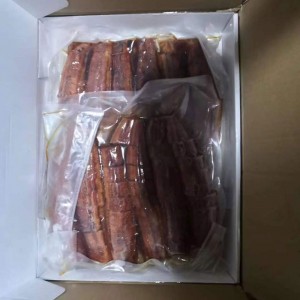
Frozen Roasted Eel (Unagi Kabayaki)
Fresh eel is best cooked on the day of purchase. If not cooking immediately, keep it in the refrigerator and use within 1–2 days. For longer storage, clean the eel, wrap it tightly, and store it in the freezer.
When buying commercially prepared kabayaki eel, look for one with a fine, delicate texture and springy, slightly charred grill marks. If vacuum-packed, check that the seal is intact with no loss of vacuum before purchase.
-
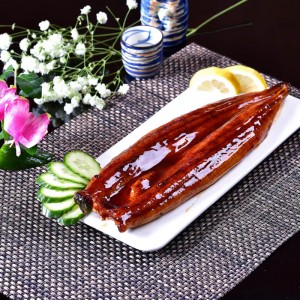
Kabayaki Roasted Eel (Heat & Serve)
Our eel is sourced from the cool-water regions of Jiangxi, China. Made from select freshwater eel and glazed with soy-based kabayaki sauce, each eel is individually vacuum-packed for freshness. The meat is firm yet tender, subtly sweet and clean-tasting, with no muddy or fishy notes. With its generous size and full, well-textured meat, it is a great ingredient for sushi and Japanese cuisine.
-
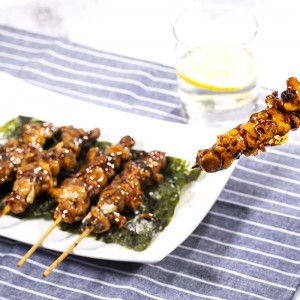
Eel Liver & Fish Maw Combo
Kabayaki eel liver skewers (kimo) are made from fresh eel liver, skewered on bamboo sticks and grilled with our signature kabayaki sauce until lightly charred. The liver is tender and full-flavoured, with a gentle smoky aroma and a subtle sweetness from the glaze. Served simply with a scattering of spring onion, they make an elegant appetiser.
Eel liver also makes a fine soup: simmered in dashi as the base, it lends the broth a distinctive smoky note. Sliced and served over rice with a drizzle of kabayaki sauce, the tender liver and rich glaze come together in a dish with real depth of flavour.
-
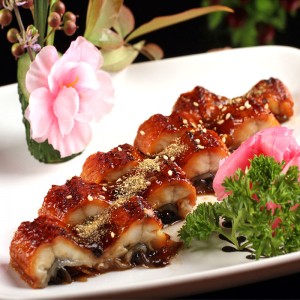
Charcoal-Grilled Kabayaki Eel
This roasted eel is made from eel fillets with head, bone and viscera removed, marinated in our signature sauce and roasted with modern equipment for a distinctive flavour. The finished product is individually quick-frozen (IQF) to lock in its original colour and taste, making it easy to store and prepare.
Vacuum-packed for freshness, it requires no extra seasoning — simply heat and serve:
- Boiling: place the sealed pouch directly in boiling water for 2–3 minutes, then remove and serve.
- Steaming or pan-frying: after thawing, steam the eel or pan-fry it briefly with a splash of sake or mirin.
- Microwave: heat the eel pieces for about 1 minute until the aroma is released, then serve.
Tender, savoury and ready in minutes, it brings authentic kabayaki flavour to your table with minimal effort.
-

Roasted Eel (Unagi Kabayaki) for Sushi & Japanese Cuisine
Kabayaki is a traditional Japanese preparation in which the fish is filleted, skewered and grilled while being repeatedly brushed with a sweet-savoury soy-based sauce, which gives it its distinctive rich flavour. Grilled without sauce, the same preparation is called shirayaki (“white grill”).
Although kabayaki is not limited to any particular fish, it has been used almost exclusively for eel since its origin, and is only occasionally applied to similar fish such as conger eel (anago) or daggertooth pike conger.
-
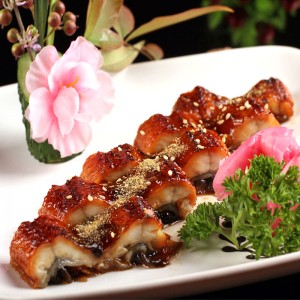
Japanese-Style Kabayaki Eel
Roasted eel is a popular delicacy in Japan, South Korea, Southeast Asia and Hong Kong, China. In Japan, seasoned kabayaki eel is the most common form, with annual consumption estimated at 100,000–120,000 tonnes. Consumption peaks in summer, especially around the traditional eel-eating days (Doyo no Ushi no Hi) in late July, and roasted eel is also becoming increasingly popular among Chinese consumers.
In Japan and Korea, eel is a summer food tradition, valued for its rich, savoury flavour and satisfying taste. As domestic supply in Japan falls short of demand, Japan imports a large volume of roasted eel every year — much of it from China. With a well-established supply chain and stable quality, we are a reliable partner for customers in these markets.